Guest viewing is limited

Weeping keel - new to me E-35-2

Kyle62

Member I
IMG_6645.jpegHi Folks!
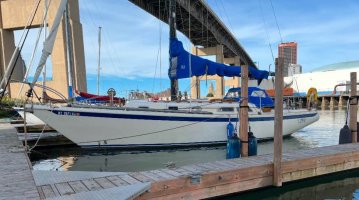
I'm new here and excited to have just purchase a 1974 Ericson 35 Mk II. She was raced extensively out of Buffalo, NY.
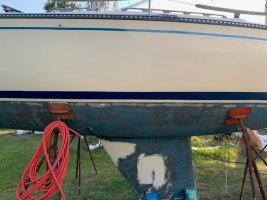
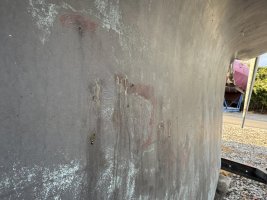
I took a picture of some weeping areas on the port side of the keel. I reached out to the FB group and others had seen this type of problem before.
I'm wondering if anyone else here has experience this? If you zoom in on the image you can see that the drips seem to have left residue lines that seem to indicate that this has been going on for a while. The boat was not launched last year due to a decline in the owners health.
 

Attachments

  • IMG_6654.jpeg
    IMG_6654.jpeg
    739.8 KB · Views: 26

Christian Williams

E381 - Los Angeles
Senior Moderator
Blogs Author
Are the drips in the lead? If so, just a shrug and some filler, seems to me.

Is it a shallow-draft keel? Photo perspective is weird to my eye.
 

Kyle62

Member I
Yeah, the picture isn't great. You can see the rudder in the back. I haven't had a chance to get back to take better images of that spot.
I was hoping someone has seen this same thing before.
 

bigd14

Sustaining Partner
Blogs Author
I think the 35-2 has an encapsulated keel. There could be water getting between the lead and the outer shell of fiberglass and weeping out in the locations in the photo. That area should have many layers of fiberglass so it seems a long shot. Any evidence of water coming into the bilge when the boat was in the water? https://ericsonyachts.org/ie/threads/ericson-35-2-encapsulated-keel-voids-never-filled.20903/

My other thought is that it’s osmotic blisters that are leaking fluid. Does it smell strongly of styrene?

Worth getting to the bottom of this.
 

Kyle62

Member I
I think the 35-2 has an encapsulated keel. There could be water getting between the lead and the outer shell of fiberglass and weeping out in the locations in the photo. That area should have many layers of fiberglass so it seems a long shot. Any evidence of water coming into the bilge when the boat was in the water? https://ericsonyachts.org/ie/threads/ericson-35-2-encapsulated-keel-voids-never-filled.20903/

My other thought is that it’s osmotic blisters that are leaking fluid. Does it smell strongly of styrene?

Worth getting to the bottom of this.
Thanks for this information. There might be something that caused the water to intrude from the bilge. As a person suggested it may be the bilge pump was a attached with fittings that allowed the water to get in from above
With information like yours and others I'm going to put together a checklist and tools like a scraper, sander, drill, and my nose to check for styrene (thanks for that clue) to make sure I use the best of my time at the boat when Buffalo weather is at 50 degrees for longer than just six hours.
The boat is over an hour's drive away so I need to plan ahead.
Thanks!
 

Kyle62

Member I
I think the 35-2 has an encapsulated keel. There could be water getting between the lead and the outer shell of fiberglass and weeping out in the locations in the photo. That area should have many layers of fiberglass so it seems a long shot. Any evidence of water coming into the bilge when the boat was in the water? https://ericsonyachts.org/ie/threads/ericson-35-2-encapsulated-keel-voids-never-filled.20903/

My other thought is that it’s osmotic blisters that are leaking fluid. Does it smell strongly of styrene?

Worth getting to the bottom of this.
Okay! That was a great link. My takeaway:

Ericson 35 Mk II construction followed common early-1970s production practice. The hull and keel were molded as a fiberglass shell, into which a large cast-lead ballast slug was installed. Void spaces between the casting and the fiberglass keel were partially filled with loose lead shot to fine-tune ballast weight and trim, rather than being fully encapsulated in resin or structural filler. Based on repair evidence and final restoration, the quantity of lead shot used in this design appears to have been on the order of several hundred pounds, approximately 300–500 lb, supplementing a total ballast weight reported at roughly 5,000 lb. The keel relied on the fiberglass structure and internal geometry for support, with no visible keel bolts in the bilge. This approach allowed precise ballast tuning during production, but also meant that severe keel strikes could breach the fiberglass shell and allow shot ballast to escape if repairs were poorly executed.
 

Drewm3i

Marine Surveyor
Time to break out the grinder and open these areas up for a better look.

Nice looking boat by the way!
 

Aqua V

Member I
Time to break out the grinder and open these areas up for a better look.

Nice looking boat by the way!
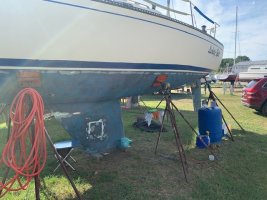
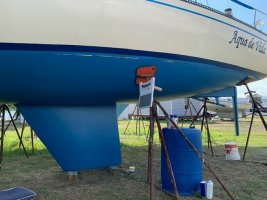
Inherited a section of the keel that resembled a patch with boat purchase (owner tried to patch) with no success. Given similar advise on grinding through the layers to find solid material, in my case down to the "metal". Filled with appropriate filler, a couple coats of barrier coat and then hull paint. Its held up far (3 years in the water.)
 

Attachments

  • hull 1.jpg
    hull 1.jpg
    78.9 KB · Views: 14
  • hull 2.jpg
    hull 2.jpg
    94.8 KB · Views: 13
  • hull 3.jpg
    hull 3.jpg
    80.9 KB · Views: 13
Top