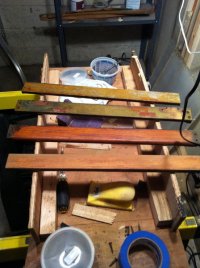
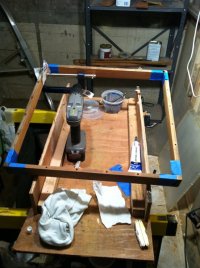
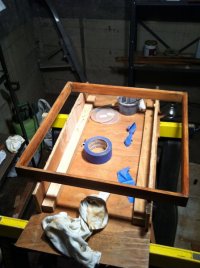
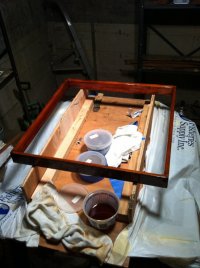
I went to TAP plastics and bought some green-edge 3/8" acrylic for ~$50 each. They have the ability to drill the holes and countersink and finish the edges, which I elected to do myself, which at one point I was cursing myself for not doing, and later was glad I didn't. They sold me a "special" drill bit and a "special" countersink for drilling the plastic.
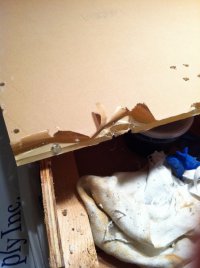
CRAP. A big chip popped out as I was drilling one of the holes. I tried gluing it back in with gorilla glue, but the stuff grew so much that it pushed the piece out of line (clamped it on edge, but not on the top and bottom). So that sucked. Oh, also, the countersink they sold me SUCKED. It melted the plastic before cutting into it. I went out and bought a nice sharp countersink that worked brilliantly from Stone Hardware in Seattle (they must know me by sight now, as the dude who comes in and looks for hours for a screw or bolt).
I went back in and told the folks at Tap about it and they were decent about the whole thing - they were like "weird, that's the one we use and we don't have any problems with it" and went in the back and got theirs, which was obviously sharper and stuff - they gave me a big break on another piece of acrylic. Still, I was pissed that I hadn't just made them drill the holes for me, that would have saved me $50 or so bucks.
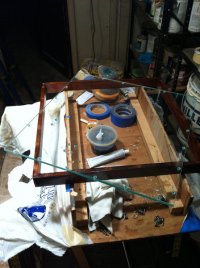
Acrylic ready to seal/screw on the forward hatch.
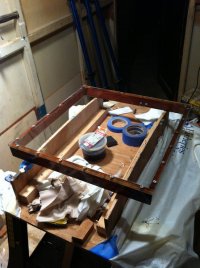
Screwed and sealed!
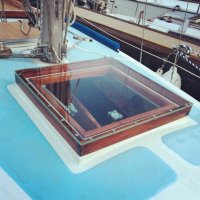
Installed! Which poses an interesting issue. For those of you who know the E27, you know the door you see through the hatch is the door to the head. Which means you can see right down into the head from the deck right now. Hrm. Luckily (?) this was the first hatch that I had used the silicone sealant on (the other hatch's glue was still curing), and I don't think I did the best job on the silicone, and I think I need to use longer screws than were in there before (I reused the originals), so I'm actually thinking that come springtime I'll take the hatch off and clean up all the silicone, then tape off some 1/2" lines at a 45° angle on the underside of the hatch and give it a good sand. Peeling up the tape should reveal a nice geometric pattern etched into the acrylic which will still let plenty of light in, while obscuring the view into the head enough that a passing glance won't reveal someone doing their duty.

The other hatch installed as well. This spring I think I'll also take all the hardware and see about cleaning it up as well, as it is somewhat corroded. I may do the 45° lines on both hatches, for consistency's sake. I also want to give myself another chance to really perfectly nail the sealant - they look great from about 4 ft away, but when you get close you can tell it's not as clean as it could be...
Oh, remember when I said I was pissed about not having TAP drill the holes for me? Well, on the first hatch (the one I didn't have to reglue/screw) I used the existing acrylic for a template, which worked fine. But the aft hatch had shifted a bit after re-gluing, and the holes were at least an 1/8" off in some places (I may have actually assembled it differently, I wasn't super careful about that). So had I had TAP drill the holes they would have been off anyway. I ended up setting the acrylic on the frame, sighting through the acrylic, and drilling pilot holes for each screw. Then I finished them off with a piece of scrap wood underneath. The holes lined up perfectly.
LESSONS:
1. Use a drill press when drilling acrylic. If you don't have one, whatever you do, keep the drill bit *straight* in the hole, any sideways motion will pop out a piece.
2. If a countersink/drill bit doesn't look that sharp, it probably isn't. If it costs $3, it's probably worth about that much.
3. Keep the protective wrap on acrylic as long as possible - preferably only removing it once you install.
4. Tape off areas where you know glue/sealant is going to gush out - when it's halfway dry, peel off the tape and take the excess with it. Super clean! However - you may have to run a razor blade to keep the excess from pulling out the seal from between the two pieces.
5. Clamp a piece of scrap wood underneath when drilling acrylic so it doesn't chip off when the bit comes through the bottom.
Overall I'm really happy with this project - the hatches look great and I can actually see through them... Which, as I type this, strikes me as a strong argument against giving them the etching treatment, as one of the biggest annoyances on a hot summer day is having the hatches open and being unable to see what's directly ahead of you from the cockpit. Hmm..