Guest viewing is limited

Conundrum of knowing and planning on a new to me boat

Out There

1988 E35-3 on Lake Erie
I got my 35-3 last summer and sail it in Lake Erie for at least the next two seasons before moving into retirement wander-land. Considering the documentation limitations and the preparations for the future I wonder what are the best steps to getting replacement parts and spares.

My current concerns are anodes, specifically the ones that live in the engine compartment like the water heater and the heat exchanger, Do I have to except that I have a very short time to remove the anode and figure out the replacement/spare or are there industry standards that make it pretty simple to figure out?
 

Loren Beach

O34 - Portland, OR
Senior Moderator
Blogs Author
Way back when I first checked (and found little of it left) the anode in the HE on my Universal diesel, I found a selection of "pencil zinc anodes" for sale at a local outdoor/boating store. When it was threaded into the little brass base, and proved to be too long, it was withdrawn and sawed off. The boat was recently purchased from a salt water environment, I should note. Like Christian, I did not (and still do not) have a vise on board! :)
 
Last edited:

Christian Williams

E381 - Los Angeles
Senior Moderator
Blogs Author
The spares in question are probably fuel filters, alternator belt, raw water pump impeller, transmission fluid, deck fill gaskets, and so on.

I find it necessary to identify the existing part on the boat (rather than expect some 'standard"), and then use an Internet supplier.

West Marine or similar tend nowadays to have big holes in their inventory, and on-line the item can be searched, found, and if wrong, returned.

The forum can always help in difficult or confusing situations, such as switches and sensors or obsolete fluids. The boats are old and each can be different in unexpected ways.

added:

except that I have a very short time to remove the anode and figure out the replacement/spare

I would pull the pencil zinc on the heat exchanger immediately, just to confirm its condition. Corroded or nonexistent means a new one pronto. I would check the zinc every few months with a new boat. Thereafter you can sort of guess how long they last in your environment.
 

bigd14

Sustaining Partner
Blogs Author
I am undergoing a similar exercise. My plan is to proactively service or replace all things engine-related like the water pump, mixing elbow, heat exchanger, hoses, fuel system, wiring, etc. so I don’t have to carry too many major spare parts. It’s too easy to overload the boat with massive amounts of tools and parts (I am trying to overcome this tendency, with limited success). In addition to Christian’s list here are some general spares/supplies that I have needed and either used or wished I had at the time a problem was found:

-Coolant (premixed)
-Heat exchanger gaskets
-Hose clamps of various sizes
-Teflon tape for plumbing fittings
-Bed-It butyl tape
-Zip ties of various sizes
-Rigging kit with split rings, clevis and cotter pins, shackles, extra blocks, etc
-Electrical kit with various wire, terminal fittings, crimper tool and proper replacement fuses.
-Engine panel ignition switch
-Assortment of wood screws and nuts and bolts and washers

In addition to a complete set of tools to cover any and all problems!
 

Jim Picerno

1989 38-200
I agree with Christian's comments about identifying the spare parts currently on the boat. As someone who's previously owned an older boat I knew the importance of identifying spares for older engines. I used the owners manual, work invoices left by the PO, a selfie stick attached to my iphone to get pictures of parts located in hard to reach areas of the engine compartment, along with many searches on this forum. My spare parts list is pretty complete but still have a few items I've not yet identified. I've yet to try Claude to see how it does identifying spares. When I bought my boat a year or so ago, I purchased a number of spares from Bay Marine in Annapolis but I understand they went out of business last month. This thread prompted me to do some internet searches for parts I'd purchased and that led me to https://www.dieselpartsdirect.com/. For my previous Perkins powered boat, the go to distributor was Trans Atlantic Diesel.
 

Waayout

Member I
I struggled with the question of what to keep after taking ownership. She had been lived in for 5-6 years by competent owners that had done a lot of work and therefore spares for almost everything were tucked away throughout. After finding my 2nd or 3rd spare joker valve I thought, what does it matter if I have a spare of something but I'm not aware that I have it?

At that point, I took everything and I mean every single thing off the boat. It took me two full weekends, it was hundreds and hundreds of pounds of everything from large pipe wrenches, an entire set of cordless dewalt tools, fiberglass mat, a million types of epoxy, every conceivable scraper, shackles, 5-6 butane torches, etc....

Moving forward, as I've worked on different systems, i.e. electrical, plumbing, engine, I look at the bins at home where I've attempted to cluster roughly by function to see if I already own something that'll assist me. It's freed space up on the boat for items mentioned by Christian, the most important aspect is I now know what those things are and where they reside. Hope its helpful, previously while i felt confident the boat had 'everything one would need' it didn't seem to matter because I had no idea where any of it was!
 

Kenneth K

1985 32-3, Puget Sound
Blogs Author
In addition to Christian’s list here are some general spares/supplies that I have needed and either used or wished I had at the time a problem was found:
All good lists...

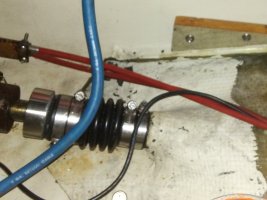
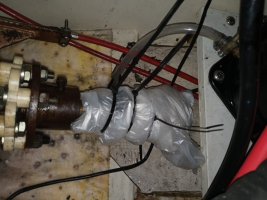
Out of experience, I'd add: If you have a PSS dripless shaft seal, I'd carry supplies to wrap/seal the bellows if it were to split/leak/rupture. Plastic bags and wire or zip-ties work in an emergency. Cut sections of an inner tube (think wheel-barrow sized or larger) would be better. Also a variety of putty types to plug the shaft log from the outside if needed.
PSS.jpg 20201224_165305.jpg

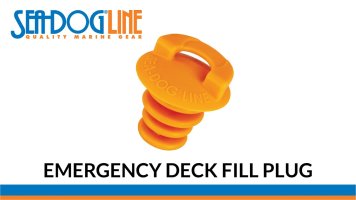
For deck fills, I just found one of these on ebay for about $7. I haven't verified the fit yet.
plug.jpg
 

Christian Williams

E381 - Los Angeles
Senior Moderator
Blogs Author
it was hundreds and hundreds of pounds of everything--

That was my case too. Some owners, like my P.O., live far away from the boat, and have to keep every maintenance element on board. Or live in an apartment, with no space. Or are moored at a facility with no available storage lockers. They don't have a choice.

But when possible, given the bulk of stuff from extra life jackets to oil change pumps to thousand of feet of used running rigging, it's better off in the garage. Which, as I say, is a luxury not available to all.
 

windblown

Member III
Blogs Author
I got my 35-3 last summer and sail it in Lake Erie for at least the next two seasons before moving into retirement wander-land. Considering the documentation limitations and the preparations for the future I wonder what are the best steps to getting replacement parts and spares.

My current concerns are anodes, specifically the ones that live in the engine compartment like the water heater and the heat exchanger, Do I have to except that I have a very short time to remove the anode and figure out the replacement/spare or are there industry standards that make it pretty simple to figure out?
In our fresh water environment (I’m on Lake Ontario), I’ve found the pencil anodes in the heat exchanger seem to last forever—though I just had the sinking thought that maybe they should be magnesium rather than zinc in fresh water?!? I bought a pack of three pencil zincs online several years ago, cut them all down (which our 32-3 manual says we’d need to do), and I’m still on the first one. Perhaps they should be magnesium To do their intended job? Any help here from others?
Of course, if you’re headed for salt water wander-land, zincs will do.
 

bigd14

Sustaining Partner
Blogs Author
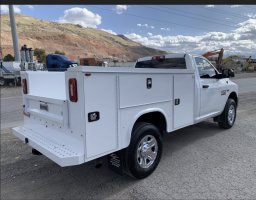
Some owners, like my P.O., live far away from the boat, and have to keep every maintenance element on board.
This is me, and it’s incredibly challenging trying to plan projects. Hauling equipment back and forth is tiresome and when you have to stop work and go buy the one item you forgot or didn’t realize you would need, the boat pile stacks up quickly. I need one of these!

IMG_0623.jpeg
 
Top