Guest viewing is limited

E32-3 keel bolt compromise?

Pete the Cat

Sustaining Member
So what is your plan for the bottom? just fill fair and paint? How deep in the laminate? The previous owner of my boat (which I think has the same hull) just filled and faired and it came out fine. I have a couple blisters that reappeared after a few years, but no big deal. I got a little flack the last time I said this, but this boat with the tri axial grid construction does not derive much structural integrity from the hull--it seems to me it is just there to keep the water out so I would not worry about it too much. I will be interested to see the next step when the keel is "dropped". I have watched this process in the yard on a few boats and it is sometimes harder than you would imagine to get the keel to separate.
 

vanilladuck

E32-3 / San Francisco
Blogs Author
So what is your plan for the bottom? just fill fair and paint? How deep in the laminate?
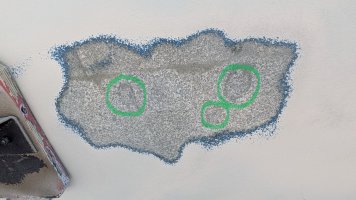
The hull on our boats is pretty thick, but the deeper gouges (highlighted in green) in the fiberglass deserve to be built back up with 25.3oz X-mat (aka 1708 Biaxial fiber with mat). While doing that we'll coat the entire hull in West System epoxy resin and then complete a final fairing with West 407 filler or QuikFair. After all that, two coats of a thick barrier coat, like Pro-Line 3000. Then the hull will be ready for bottom paint. I'm switching away from Pettit Trinidad to Seahawk Biocop TF based on the improved performance I've heard from other owners and my diver.

1775955332815.jpeg

I've heard some stories about keel drops, including one where it took several days to separate the keel. I think the front office at the yard has popcorn in available for customers ;)
 
Last edited:

Loren Beach

O34 - Portland, OR
Senior Moderator
Blogs Author
I will be interested to see the next step when the keel is "dropped". I have watched this process in the yard on a few boats and it is sometimes harder than you would imagine to get the keel to separate.
Way back, our boat's keel is pictured in the earlier major thread on this subject. I still recall that the yard mgr said that they sometimes had to 'bump' a keel a few times with a forklift to get the old sealant to let go. Our hull lifted off fairly easily, further indicating that the OEM mold-release wax had indeed not been properly removed back in 1988.
Decades later, it still shows zero signs of leaking or movement.
 

vanilladuck

E32-3 / San Francisco
Blogs Author
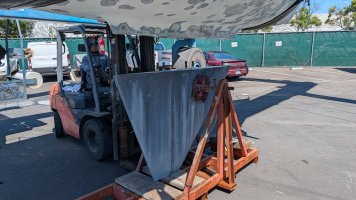
The keel is off the boat!

PXL_20260423_190503781.jpg

Pretty amazing how easily it separated from the stub. No wedges or labor intensive hours of prying, dissolving, and breaking sealant. Once the keel was clamped in the cradle, the travel lift pulled the boat right off the top. I wonder if some mold release wax was still on the stub when the keel was bedded.

PXL_20260423_191553104.jpg

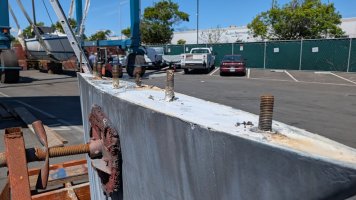
I put a wire wheel to the keel bolts so we could get a better look at the crevice corrosion. It appears that at least three of the bolts are compromised to some degree. You can see their condition in the video below. For conversational purposes, here's the order of appearance and initial rough evaluation:

#7, 0.5" diameter, most aft: OK
#6, 1" diameter: OK
#5, 1" diameter: compromised, noticeable corrosion which continues around the entire circumference
#4, 1" diameter, stbd side: compromised, noticeable corrosion which continues around the entire circumference
#3, 1" diameter, port side: heavily compromised, unserviceable
#2, 1" diameter: OK
#1, 1" diameter, most forward: OK


I'm currently looking for metal fabrication shops in the SF Bay Area that specialize in removing and refusing keel bolts. If anyone has any recommendations, please suggest! :)
 
Last edited:

Dave G.

1984 E30+ (SOLD)
As it looks the bolts are solid below and above the corrosion is using a threaded sleeve a viable option ? Fill/repair, chase the threads with a die, thread on a sleeve. May have to enlarge the holes in the hull a bit going back in. Embedding the new ones in the keel seems very risky to me, of course I've never had to do that or know how.
 

Prairie Schooner

Jeff & Donna, E35-3 purchased 7/21
@vanilladuck
Bryan,
Thanks for this well documented report. I've a mortal fear of ever having to do this job and can identify with the emotions in your earlier video. Wishing you the best as you make decisions and forge ahead. With your past projects as precedent, I'm sure the result will be solid and well executed.

I'm also wondering if the threaded connectors might be the best solution. The original design of J-bolts in molten lead is elegantly simple, but difficult to replicate in a repair. In addition to the labor, there are the hazardous material concerns.

It's a great puzzlement as to how most of those bolts can look so nice while a few are so badly corroded. Could there have been an impurity in those particular originals? Or a little bit of ignoble metal stuck in the threads? Mysterious travel of electrical currents? Philosophical musings of little use to your actual task at hand.

Good luck,
Jeff
 

Loren Beach

O34 - Portland, OR
Senior Moderator
Blogs Author
Regarding the uneven corrosion of the threaded parts, to me it's all about Time and Moisture and Lack of oxygen. When the seal is complete between top of keel and hull, the SS has a Long Long life. Anywhere that seal fails, even so slightly, the water works its way in and a slow corrosion process... slowly proceeds. As noted in the large past thread where we posted up pix of keel re-bed, we had only light surface rust. Luck, timing, and also being proactive in doing this work. Caution, and a local yard well equipped to do the work were a large part of my good fortune. Having read about the value of doing this, I considered it an expectation of owning a keel boat. Conservative upbringing, not "smarts." Sure glad I had that work done, tho. To me this is like proactively re-bedding all our deck fittings. Not at all the romantic part of boat ownership :( but can save $$$ in the long run.
 
Last edited:

vanilladuck

E32-3 / San Francisco
Blogs Author
As it looks the bolts are solid below and above the corrosion is using a threaded sleeve a viable option ? Fill/repair, chase the threads with a die, thread on a sleeve.
This is one option that was suggested to me by a local boat yard. There are pros and cons to every solution. I think the cons here would include reusing bolts that might be heavily compromised below the visible corrosion.

A similar solution was suggested by another yard to drill and anchor new bolts while leaving the existing 7 bolts in place (i.e. sistering). I'm not a huge fan of this because it ignores the designed layout of the existing keel bolts and weakens the keel stub in the hull of the boat with more holes. This would also mean losing some ballast weight as pieces of the keel lead need to be removed for anchoring and then filled with epoxy.

Anything short of replacing the existing bolts with new threaded stock and refusing with lead/antimony is a compromised repair.

I'm currently talking with MarsKeel in Ontario, Canada about recasting a new keel. They used to refuse keel bolts in lead keels, but can no longer carry out this work based on health standards changing in region.

Thanks for this well documented report. I've a mortal fear of ever having to do this job and can identify with the emotions in your earlier video. Wishing you the best as you make decisions and forge ahead. With your past projects as precedent, I'm sure the result will be solid and well executed.
Thank you @Prairie Schooner for your kind words!

It's a great puzzlement as to how most of those bolts can look so nice while a few are so badly corroded. Could there have been an impurity in those particular originals? Or a little bit of ignoble metal stuck in the threads? Mysterious travel of electrical currents? Philosophical musings of little use to your actual task at hand.
Indeed a puzzle! And we may never know the real answer. At the start of this thread, in 2023, I found a bilge pump float switch with it's metal base resting on the really badly compromised bolt. I know the boat had been in some hot marinas with stray AC current. And because the boat had the original AC wiring, the green safety ground was connected to the DC ground, which in turn was effectively touching the keel bolt through the float switch metal base.

I'd bet the corrosion is a combination of galvanic and electrolytic.
 

gabriel

Live free or die hard
Anything short of replacing the existing bolts with new threaded stock and refusing with lead/antimony is a compromised repair.
Truthfully, thats something only a navel engineer could determine with any certainty, and their stamp behind it. Chasing with sleeves or adding another bolt may be perfectly fine solution actually.

If the boatyard stands behind their work, I would just go with what they say, they see many of these. Having a new keel cast seems unpractical.
 

Dave G.

1984 E30+ (SOLD)
I think the cons here would include reusing bolts that might be heavily compromised below the visible corrosion.
I would think that the lead encasement would protect the bolts inside the keel ? Maybe ask the yard(s) or MarsKeel if they have seen corrosion on the portion of a bolt that is encapsulated in the keel. Maybe you already asked, but if not it may eliminate that possibility.
 
Top