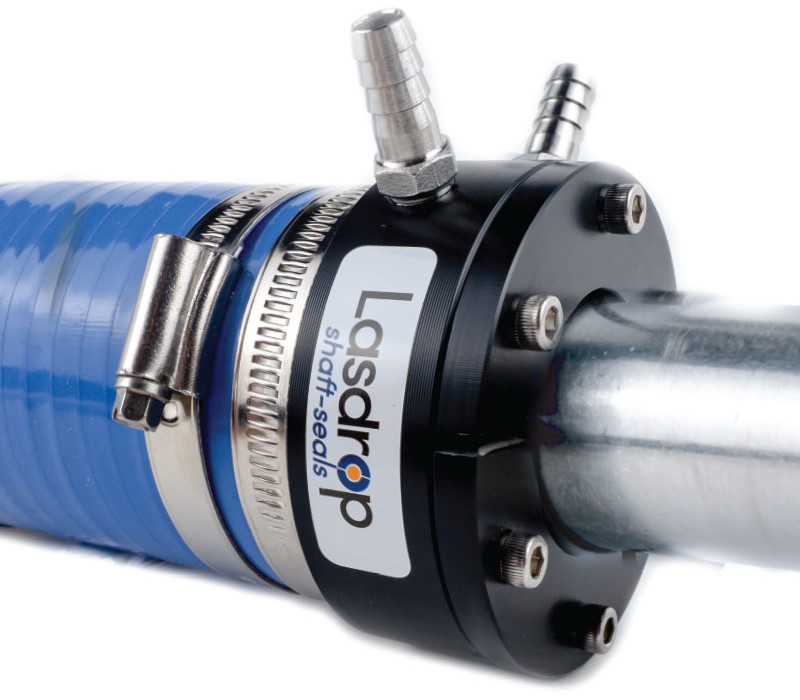
I must admit I am confused about this -- I mean, the shaft takes up most of the space in there; I would have assumed I could stuff a sock, or cut up a T-shirt to get stuff to cram in around it to stop the leak, or slow it enough that the pump could keep up.
Not to try to make comparisons with what may may/not have happened here, but I did have a PSS rupture back in 2021. I did a blog post about it
here.
I think the things that made my ordeal manageable were; 1) I heard the exact moment the seal ruptured and was able to start addressing the leak within a few minutes, 2) it was daylight in smooth water, and, 3) I had the initial bilge pump capacity (a rule 800 and and 500 pump) to stay ahead of the leak. Under these conditions I was able to take materials I had on hand (trash bags and zip-ties) and slow the leak enough that I could leave the boat, get more materials, and make temporary repairs that lasted until I could haul out days later.
But it's well worth running through the what-if scenarios: If you wake in the dark to find a salon full of water, how are you going to find the leak? Once underwater, you can't hear the leak any more, and may not see the water streaming in even if looking right at it. So now you're feeling around in the dark possibly on your belly or side. If your body is sloshing around or floating while doing so, you now likely need one hand just to hold your body steady. If a flashlight is in your other hand, how do you fix the leak? If you have a headlamp on, is it waterproof?
Also, once the water gets above the floorboards, all of the bilge access plates will have floated up off of the sole. Now you have six or eight open holes in your slippery floor. Just walking through the cabin is now a hazard. If you twist your ankle stepping any one of those open holes, yourself chances of fixing the leak or executing your self-rescue go down even further.