• Untitled Document

    Join us on May 22nd, 7pm EDT

    for the CBEC Virtual Meeting

    EY.o May Zoom Meeting

    All EYO members and followers are welcome to join the fun and get to know the people you've met online!

    See the link below for login credentials and join us!

    May Meeting Info

    (dismiss this notice by hitting 'X', upper right)

Shaft Seal Leak - Yacht Sinks

Prairie Schooner

Jeff & Donna, E35-3 purchased 7/21
.
"taking on water through a deteriorating shaft seal"
.
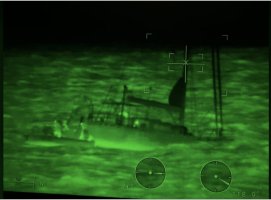
Scotch Mist nite vis 1 sm.jpg
.
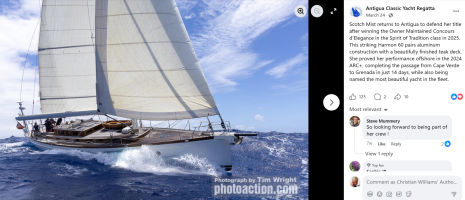
This story came across the local news. Connecting some digital dots, it looks like a 60' Harman out of Great Britain.
.

Scotch Mist MT 2026_5-13 8pm sm.jpg
From Marine Traffic last night. This ping would have been from ~10pm Tuesday.
.

Scotch Mist MT comp sm.jpeg
Marine Traffic app. ( I think the length is wrong here.)
.
- https://www.dvidshub.net/image/9678...ts-disabled-sailing-vessel-south-block-island
- https://www.sail-world.com/photo/517939
.
The situation must have been pretty dire to let a beauty like that go underwater. It will be interesting to hear anything more that comes out of this. I've always read that a failed shaft seal is something an experienced mariner should be prepared to fix. Come to think of it, I don't have all the kit on board that I should for this. If it can happen to a boat of that caliber, it can happen to ours.
 

Frank Langer

1984 Ericson 30+, Nanaimo, BC
I know that PSS tech staff now recommend replacing the rubber bellows and clamps every 6 years, used to be 11 until their lawyers said 6. When I spoke with them, they said that they can last up to 25 years if not neglected or immersed in oil.
Aside from that, incorrect tension (the correct setting is noted on their site) could cause leaking, ensuring C clamps are doubled and tight is important, but what else could cause this problem. I'm not aware of any other maintenance for a PSS.
Frank
 

bigd14

Sustaining Partner
Blogs Author
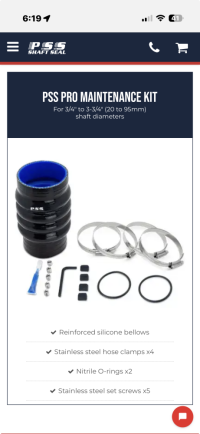
PSS Shaft seal replacement is on my list although current one looks good. Anyone use the Pro version kit which uses a silicone hose? Might last longer?


1778808020345.png
 

N.A.

E34 / SF Bay
I must admit I am confused about this -- I mean, the shaft takes up most of the space in there; I would have assumed I could stuff a sock, or cut up a T-shirt to get stuff to cram in around it to stop the leak, or slow it enough that the pump could keep up. In fact, an old sailing instructor told me to do just that once (though I think they were referring to any leak, not specifically a shaft seal/stuffing box.)

Anyway, it seems weird that people with such a nice boat would be done in by a leaking shaft seal, unless the shaft were utterly inaccessible... and the latter also seems hard to imagine.

I did get some of that silicone tape a while back; my understanding is you wrap it tight and it self-adheres (more than that: actually permanently bonds to itself). I always figured that's be good for a shaft or throughhull or hose that was giving trouble. I think the military finds it so handy they issue the stuff to a lot of soldiers (probably the logistics ones running trucks, I assume).

PS: I think I got this tape, but will have to check my kit. I may have found a known manufacturer (3M or Dow or something) I trusted more.
 

Prairie Schooner

Jeff & Donna, E35-3 purchased 7/21
I have the same questions you guys do. The CG report linked is all I've seen and it doesn't say what kind of seal and for that matter, which shaft. This was the initial report from guys just plucked from the sea, in shock. It will be interesting as more details come out. But I am going to check my PSS and review my emergency supplies.
 

N.A.

E34 / SF Bay
Someone in Florida lost their E38 a few years ago, if I remember, because they were in heavy seas and didn't notice until too late that they had a leak, and by the time they saw it it was too late to save the boat. I wonder if it was more of a situation like that -- someone goes down into the cabin and notices 3 feet of water...

Which reminds me I want to get a louder alarm for the bilge pump. It has one, but I want one that will wake the dead.
 

Frank Langer

1984 Ericson 30+, Nanaimo, BC
I think part of the problem is that if one needs to motor, the prop shaft will be turning, so any tape applied where the prop shaft exits the boat will not hold, be ripped off by the turning shaft. Perhaps a rubber piece around that opening, taped in place could reduce water inflow. I hope I never have to test that.
Frank
 

bsangs

E35-3 - New Jersey
I know that PSS tech staff now recommend replacing the rubber bellows and clamps every 6 years, used to be 11 until their lawyers said 6. When I spoke with them, they said that they can last up to 25 years if not neglected or immersed in oil.
Aside from that, incorrect tension (the correct setting is noted on their site) could cause leaking, ensuring C clamps are doubled and tight is important, but what else could cause this problem. I'm not aware of any other maintenance for a PSS.
Frank
I have the Tides Marine version, and while they don't give a definitive end of life for the seal - they say if it's not leaking, leave it in place - they also suggest that if the seal "has been in the boat for more than two years and the shaft is uncoupled for any reason during a regularly scheduled
haul out, it would be prudent to replace the lip seal at that time." Wish I'd read that during the month she was on the hard in April. Oh, and I like this suggestion for replacing the seal without hauling the boat: "Assuming you have basic mechanical skills (and a Spare Seal Carrier is in place), you can, indeed, change the lip seal without hauling the vessel. It also helps to have a sense of humor and patience."
 

Prairie Schooner

Jeff & Donna, E35-3 purchased 7/21
Someone in Florida lost their E38 a few years ago, if I remember, because they were in heavy seas and didn't notice until too late that they had a leak, and by the time they saw it it was too late to save the boat. I wonder if it was more of a situation like that -- someone goes down into the cabin and notices 3 feet of water...

Which reminds me I want to get a louder alarm for the bilge pump. It has one, but I want one that will wake the dead.

This might be the incident you are referring to:
 

Christian Williams

E381 - Los Angeles
Senior Moderator
Blogs Author
The owner of that ERicson 38 has no idea what happened to him. Efforts to get specific explanation here were unsuccessful.

We don't know that this accident boat had a dripless, or the nature of the shaft seal issue. It is hard to believe that a boat can fill with water without the crew noticing, or that a dripless shaft seal cannot be stopped leaking or slowed to reasonable ingress by wrapping something around it.

We need more information and probably wlll get it eventually.
 

Drewm3i

Member III
The owner of that ERicson 38 has no idea what happened to him. Efforts to get specific explanation here were unsuccessful.

We don't know that this accident boat had a dripless, or the nature of the shaft seal issue. It is hard to believe that a boat can fill with water without the crew noticing, or that a dripless shaft seal cannot be stopped leaking or slowed to reasonable ingress by wrapping something around it.

We need more information and probably wlll get it eventually.
This was my boat before Richard bought it, had work done, and proceeded to take it offshore and got caught heading north into an oncoming front system. It was March or April I believe, and he was caught alone in 20' steep seas on a new to him boat that had only ever been used as a day sailor and short-range coastal cruiser, that was pushing 35 years (1987).

When I had it, it had a traditional flax packing gland that dripped a drop every few minutes. I have no idea if Richard replaced the packing gland, but I seriously doubt it.

What likely failed--do note that Richard reported falling off a 20' wave crest into a trough, with a subsequent crashing sound--on that boat was either the plastic knotmeter/log (there is a defect on some B&G/Airmar units from the late-2010s, that I believe also almost sank Sailing Zingaro's Oyster), or one of Ericson's inexplicable PVC elbows connected straight to threaded thru-hull flanges BEFORE the in-line ball valves, which are needed to close/seal the thru-hull. It could have also been a hose or sink drain of course--we will never know for sure.

In short, Richard was injured in the ordeal and wasn't able to locate the reportedly slow leak that went on for hours before she finally sank.

Below is the boat--and contrary to the video title, she was sidestruck twice: once 4 years before we bought her, and another time while under contract. I loved and still love this beautiful vessel, which I named "Walden" (Richard kept the name).

This is the boat when I went to sell her; I was sinply exasperated and drained by the never-ending refit at that point:


These adventures and the lessons learned along the way are actually the subject of a philosophical memoir I have been writing off and on since 2019 about the whole experience (that is nearing completion, but i am supremely busy at present).

Walden is the reason I still frequent this forum--and still admire 80s and 90s Ericson's/PS Ericson's to this day.
 

Drewm3i

Member III
Thanks. What is "sidestruck"? I looked it up but didnt get much help. A lightning term?
Yes--it is basically when a strike hits something nearby (e.g. a tree, house, or power pole), but also attaches to something nearby (e.g. a sailboat mast); it can also happen within a boat with sidearcing between rigging, metal tanks, etc. This is why all metallic components should be bonded and then grounded (something Ericson neglected as a Southern California builder, but which Sabre, Hunter, and some other East Coast builders took into consideration).

A sidesteike occurs because lightning and electricity take all available paths to ground. I actually wrote an article about "Lightning and Sailboats" for either Sailing Magazing (RIP) or Good Old Boat about this event, and a number of other experiences to friends/acquaintances whose boats were also struck around the same time. Walden (Kismet before that) came from the lightning capital of the Western World: Port Charlotte, FL.

I kid you not: from 2018-2019, I personally knew of three boats hit (of the 5 or 6 I knew): Walden was hit; Bonzee, a friend's Endeavour 42, was hit (after a full refit) on the 4th of July while watching fireworks--I actually have pictures of this event from a security camera that he had sent me at the time buried somewhere; and Soulianis (from Sailing Solianis) was hit while anchored out near Jacksonville.

Walden and Soulians--a 1979 Tartan 37--had the least damage with their bolt-on fin keels, while Bonzee suffered grave systems (and some hull damage) damage (DC and AC breakers welded, etc.). The owner had just finished refitting the boat and was like one month post launch, and then had to go back and do it all over again--did I mentione Florida is a terrible place for sailboats to live?

I had actually added a lightning grounding connector, and some other protection devices to Walden--a gas-block coaxial surge protector, and a TVSS (transient voltage surge spike protector)--and her mission-critical systems.

I would be happy to dig up the article if anyone is interested. Thankfully none of my additions were tested, but sadly she sank. She was such a beautiful boat.
 

Dave G.

1984 E30+ (SOLD)
PSS Shaft seal replacement is on my list
Good idea if you don't know the age of the existing one. I changed mine while replacing a coupler and shaft. Never had a problem with it but couldn't believe the difference between the old bellows and the new one. The old one you could compress with little effort, the new one was also thicker and I had to pretty much stand on it to fully compress it. Definitely a big improvement in the confidence department for me. They also sell a SS locking collar which provides further protection against the main collar shifting.


Christian Williams

E381 - Los Angeles
Senior Moderator
Blogs Author
Perhaps I am the only one who has not heard of the coupler breaking and the shaft falling out of the boat? This is perhaps motorboat issue?

We have all heard horror stories of boats sinking when a coupling breaks and the shaft is ripped out of the boat. PSS Seal has a simple solution to assist in keeping the shaft in the boat. The Shaft Retention Collar is designed to help retain the propeller or rudder shaft in your vessel in the event of catastrophic failure of the coupling or if the shaft comes free from the coupling.
 

Dave G.

1984 E30+ (SOLD)
A friend of mine, who has a C&C 37, had his shaft come loose from the coupler when he put in reverse while docking but luckily(or unluckily) it hit the rudder before it fell out. Pretty big chunk out of the rudder and the landing was rough too. So I guess if he had any offset on the shaft it could have spun right out of the boat. He has a packing gland though, be a little harder with a PSS for the shaft to leave the boat.
 
Top