

BSwem
New Member
The boat formerly known as Shoestring showed up with bare fiberglass, missing core, and a lot of potential.
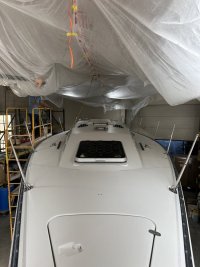
Ten months, hundreds of hours, and more sanding than I care to remember, she’s almost ready to splash.
Drawn in by the wind—and the challenge
What first pulled me toward sailing was the wind, the silence between gusts, and the challenge of keeping everything moving with no engine, no noise, and little margin for error.
I’m the kind of person who relaxes by being engaged. I need just enough complexity and problem-solving to keep my brain occupied if I want any shot at real peace. Sailing seemed like the right kind of hard—something that might quiet my mind through activity.
I’d been circling the idea of getting a sailboat for a while. Then last fall, an opportunity showed up: a stripped-down Olson 34 sitting under a lean-to. The deal was simple—put in the work, and I’d have access to the boat.
That was ten months ago. I’ve been deep in the project ever since.

Starting point: bare glass & exposed rot
The boat had already had all of its nonskid ground off. Large sections of the deck were bare fiberglass, and around the mast and the port chainplate, the outer skin and core had already been cut away. Some of the surrounding deck areas were still intact, but they all needed to be checked closely.
We didn’t need to re-core the whole boat, just the worst spots that had already been opened up. Still, even replacing a few small areas properly meant a full teardown and rebuild of those sections.
A lot of parts were already off the boat. Some were labeled. Some weren’t.
It was a true project boat—with solid potential hiding under a lot of work.
Core repair and vacuum bagging
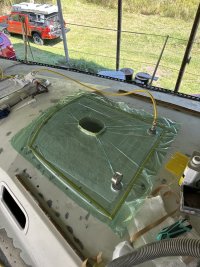
The damaged core around the mast and port chainplate got replaced with Coosa Board. After fitting and bedding the new core, I laid up fresh fiberglass and vacuum-bagged it to ensure solid resin saturation and no voids.
The surface came out clean and tight, and the surrounding deck faired in smoothly. Even though it was a small portion of the overall deck, it felt like a major milestone—putting structure back into the boat after weeks of taking things apart.
Fairing: where time disappears
I used TotalBoat’s two-part fairing compound, the stuff in the blue and yellow tubs. You mix it, spread it, sand it, and repeat. I didn’t use a guide coat. Just laid it on, sanded it smooth, and went again until everything felt right under hand.
That was a lot of sanding. But compared to what came next, it felt almost efficient.

Paint and nonskid
I was lucky to have a local painter who was willing to spray the boat—but that meant I had to take full responsibility for prep. Every surface needed to be cleaned, faired, sanded, and ready to go. He made it clear: if the paint didn’t lay down well, it was going to be because I hadn’t prepped it right.
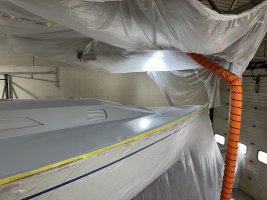
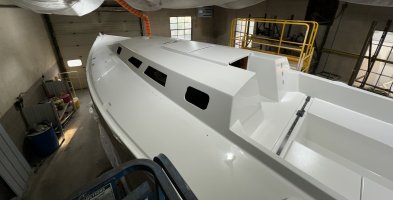
We sprayed AwlCraft 2000 in Fleet White on all the glossy surfaces. The results were great—solid shine, good durability, and a clean finish. I couldn’t have pulled that off without professional help, and I’m still grateful for the advice, tips, and reminders that kept me out of trouble.
Once the gloss was down, I masked off all the nonskid areas, laid out the zones, and prepped for spraying Awlgrip with GripTex.
Laying it out was tedious—but sanding up to every tape edge before spraying was worse. I’ve done a lot of sanding on this boat, but nothing more mentally draining than tapeline prep. When the last edge was taped, sanded, and sprayed, I pulled the tape and stood back. The lines were clean. For the first time, she looked finished.

Hardware reinstall: death by a thousand fasteners
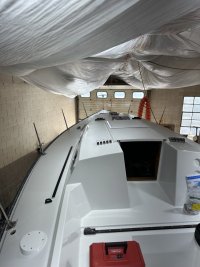
Once the paint was done, it was time to start putting the boat back together. That sounds simple. It wasn’t.
Every fastener hole had to be drilled, hogged out, filled with epoxy, re-drilled, chamfered, dry-fit, bedded, installed, torqued, and then torqued again after bedding cured. Repeat that process for every piece of hardware on the boat, and you start to understand what the past few weeks have looked like.
Some of the original hardware went back on, but a lot of it was replaced:


Electrical and systems upgrades
With the hardware going back on, I also started pulling together the electrical system, trying to strike a balance between long-term flexibility and keeping the budget under control.
The setup includes:
Right now, the priority is just getting the boat sailing. There’s still plenty of work to do, but this system should give me a reliable, modern backbone that won’t need rethinking when the next phase of upgrades comes along.
What’s left before launch
The boat’s close, but not quite there yet. The punch list has shrunk a lot in the last month, but there are still a few key things that need to happen before she hits the water:
What’s next
It’s been a long haul, but I’m getting close to launch. There’s still a lot to figure out—interior work, ongoing upgrades, and probably a dozen little things I haven’t thought of yet—but if the boat sails, I’ll be happy. That’s what I’ve been working toward since day one.
This is my first post on the forum, so consider it an introduction—and a bit of a download on where the project stands. I’ll try to post updates as things progress, especially once we’re in the water.
If you have any questions about the work I’ve done so far, feel free to ask—I’ll do my best to answer.
Ten months, hundreds of hours, and more sanding than I care to remember, she’s almost ready to splash.
Drawn in by the wind—and the challenge
What first pulled me toward sailing was the wind, the silence between gusts, and the challenge of keeping everything moving with no engine, no noise, and little margin for error.
I’m the kind of person who relaxes by being engaged. I need just enough complexity and problem-solving to keep my brain occupied if I want any shot at real peace. Sailing seemed like the right kind of hard—something that might quiet my mind through activity.
I’d been circling the idea of getting a sailboat for a while. Then last fall, an opportunity showed up: a stripped-down Olson 34 sitting under a lean-to. The deal was simple—put in the work, and I’d have access to the boat.
That was ten months ago. I’ve been deep in the project ever since.
Starting point: bare glass & exposed rot
The boat had already had all of its nonskid ground off. Large sections of the deck were bare fiberglass, and around the mast and the port chainplate, the outer skin and core had already been cut away. Some of the surrounding deck areas were still intact, but they all needed to be checked closely.
We didn’t need to re-core the whole boat, just the worst spots that had already been opened up. Still, even replacing a few small areas properly meant a full teardown and rebuild of those sections.
A lot of parts were already off the boat. Some were labeled. Some weren’t.
It was a true project boat—with solid potential hiding under a lot of work.
Core repair and vacuum bagging
The damaged core around the mast and port chainplate got replaced with Coosa Board. After fitting and bedding the new core, I laid up fresh fiberglass and vacuum-bagged it to ensure solid resin saturation and no voids.
The surface came out clean and tight, and the surrounding deck faired in smoothly. Even though it was a small portion of the overall deck, it felt like a major milestone—putting structure back into the boat after weeks of taking things apart.
Fairing: where time disappears
I used TotalBoat’s two-part fairing compound, the stuff in the blue and yellow tubs. You mix it, spread it, sand it, and repeat. I didn’t use a guide coat. Just laid it on, sanded it smooth, and went again until everything felt right under hand.
That was a lot of sanding. But compared to what came next, it felt almost efficient.
Paint and nonskid
I was lucky to have a local painter who was willing to spray the boat—but that meant I had to take full responsibility for prep. Every surface needed to be cleaned, faired, sanded, and ready to go. He made it clear: if the paint didn’t lay down well, it was going to be because I hadn’t prepped it right.
We sprayed AwlCraft 2000 in Fleet White on all the glossy surfaces. The results were great—solid shine, good durability, and a clean finish. I couldn’t have pulled that off without professional help, and I’m still grateful for the advice, tips, and reminders that kept me out of trouble.
Once the gloss was down, I masked off all the nonskid areas, laid out the zones, and prepped for spraying Awlgrip with GripTex.
Laying it out was tedious—but sanding up to every tape edge before spraying was worse. I’ve done a lot of sanding on this boat, but nothing more mentally draining than tapeline prep. When the last edge was taped, sanded, and sprayed, I pulled the tape and stood back. The lines were clean. For the first time, she looked finished.
Hardware reinstall: death by a thousand fasteners
Once the paint was done, it was time to start putting the boat back together. That sounds simple. It wasn’t.
Every fastener hole had to be drilled, hogged out, filled with epoxy, re-drilled, chamfered, dry-fit, bedded, installed, torqued, and then torqued again after bedding cured. Repeat that process for every piece of hardware on the boat, and you start to understand what the past few weeks have looked like.
Some of the original hardware went back on, but a lot of it was replaced:
- All operable hatches were replaced, except the large forward hatch (which is still on the wish list—$3,500 doesn’t exactly grow on trees).
- Stanchions and railings were reused, and I polished every inch of stainless—so they’re in much better shape now than when I started.
- Stainless lifelines may get replaced with Dyneema. They’re still in good condition, but I’d love to switch them out.
- All new rope clutches—I went with Karver KJS-12s. They’re new to the market and a bit of a wildcard, but they look great and feel solid. I’m excited to see how they perform and what more experienced sailors think of them compared to the usual Spinlocks.
- New Genoa tracks and line organizers
- Original mast collar reused
- Winches are original, for now—cost control is real
- All exterior teak has been removed, both for durability and to simplify maintenance
- New handrails are being fabricated from RichLite, a high-resin, paper-based material made from 100% post-consumer recycled content. It’s tough, easy to machine, and commonly used for skate ramps. The new rails will match the shape of the originals, but they’ll be black instead of teak.
Electrical and systems upgrades
With the hardware going back on, I also started pulling together the electrical system, trying to strike a balance between long-term flexibility and keeping the budget under control.
The setup includes:
- New lithium house bank
- AGM start battery
- Smart charger
- DC-to-DC (B2B) charger
- All new tinned copper wiring, sized for future expansion
Right now, the priority is just getting the boat sailing. There’s still plenty of work to do, but this system should give me a reliable, modern backbone that won’t need rethinking when the next phase of upgrades comes along.
What’s left before launch
The boat’s close, but not quite there yet. The punch list has shrunk a lot in the last month, but there are still a few key things that need to happen before she hits the water:
- Fabricate and install fixed windows – The acrylic is cut, and I’m working on the install now.
- Install winches
- Finish mounting electronics – Wiring is underway. Just need to wrap up the terminations and get everything mounted.
- Polish and wax the hull – Still needs to happen.
- Install lifelines
- Launch – Targeting mid-July.
What’s next
It’s been a long haul, but I’m getting close to launch. There’s still a lot to figure out—interior work, ongoing upgrades, and probably a dozen little things I haven’t thought of yet—but if the boat sails, I’ll be happy. That’s what I’ve been working toward since day one.
This is my first post on the forum, so consider it an introduction—and a bit of a download on where the project stands. I’ll try to post updates as things progress, especially once we’re in the water.
If you have any questions about the work I’ve done so far, feel free to ask—I’ll do my best to answer.

