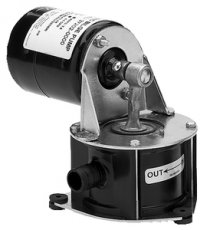
Bilge pump electrical dilemma....please help

Frank Langer

1984 Ericson 30+, Nanaimo, BC
Hi,

I have an old (probably original) Jabsco Water Puppy electrical bilge pump mounted in a port hole in the quarterberth of my 1984 E30+. It has been working fine, though I have taken it apart a couple of times to replace the impellor--once took the wrong bolts out and opened up the motor part, but it looked ok and I got it back together and it's been fine.

However, lately when I raise the plastic switch in the bilge, it takes a couple of times for the pump to run, as if it was sticking; I only do this for a second at a time a couple times a week to ensure it's working. Today it wasn't working at all. I noticed that the 15 amp fuse was blown. Because the fuse broke when I tried to take it out of the in-line fuse holder, I bought a new fuse/fuse holder and wired it up. However, before I completed the wiring I briefly touched/connected the positive wires before wiring in the fuse holder to see if the pump would run--I got a pretty strong spark, but no pump activity, so didn't try that again. I was puzzled that the motor didn't run then. I also removed the impellor, thinking it might be sticking, but it looked like new, so I greased it with water resistant winch grease and reinstalled it. After wiring in the fuse holder and greasing the impellor the pump worked for a second or two and stopped--another fuse blown.

I checked the crimped connections to the fuse holder and they are solid. The wire to the DC panel looks fine and the connection there looks good. The negative wire goes under the engine out of site, but I recently cleaned and tightened all the negative connections on the engine just for good measure (weeks ago and everything has worked fine afterwards).

I don't know what could be causing the blown fuses and pump malfunction. I'm thinking an electrical short/loose connection somewhere, or a seized pump motor drawing too much current. But the connections look ok, and the pump motor did work for a second or two before blowing the fuse, so it can't be seized, I think. I debated running the pump without the fuse for longer than a second to see if it will run longer, but I know fuses are there for a reason and I'm a bit uneasy about having wires get too hot or causing other problems.

I do have a voltmeter and an ohm meter (no ammeter). I know I am getting normal voltage to the pump, but I have never understood how to check for resistance with the ohmmeter, which might tell me if the motor is shot.

In short, I have exhausted my very limited electrical problem-solving ability, and would appreciate any advice on how to determine what the problem might be, how to check the pump motor. I can replace the bilge pump with a new one, but don't want to do that until I know that the existing one is "toast" in case the pump/motor isn't the problem.

Thanks for any tips and advice.

Frank
 
Last edited:

Guy Stevens

Moderator
Moderator
Take the pump head apart

The water puppies are prone to having the impeller stick to the heads of the pump and causing rotor lock and high amp draw. Never run electrical things without a fuse in line.

Take it apart, and see what is going on in the head of the pump. You most likely will find the impeller either stuck to the head of the pump. It does this when the rubber gets old. You can replace the impeller. Or you will find that the impeller is jammed with broken bits of itself.

In any case a water puppy is not the best choice for a bilge pump. I would recommend a submersible type in the bilge or a remote mount diaphram type like the Par Jabsco style.
 

Frank Langer

1984 Ericson 30+, Nanaimo, BC
Thanks, Guy...

Thanks, Guy, for your reply. I did take the head apart and the impellor looked like new (I had replaced it about a year ago, and the bilge pump gets little use). So I greased it with water resistant winch grease (all I had at the boat) and reinstalled it. So I can't figure out what would all of a sudden cause the pump to blow fuses. Is there anything else I can do to test the pump/motor, or should I simply install a new one.

I would like to stay with a remote located pump for the following reasons:

1) I have little room in the bilge compartments of the E30+ for a bilge pump there
2) I have a separate automatic/off/manual switch which I would like to keep
3) I can't easily access the wires in the current set-up, so undoing the right wires to remove
this set-up and/or connecting a submersible pump into this arrangement is beyond my
wiring/electrical knowledge, assuming I can even follow the wires under the bilge/engine.

Any other recommendations or advice? If not, I will likely replace the existing pump with the Par Jabsco as you recommended.

Thanks,
Frank
 

Loren Beach

O34 - Portland, OR
Senior Moderator
Blogs Author
Thanks, Guy, for your reply. I did take the head apart and the impellor looked like new (I had replaced it about a year ago, and the bilge pump gets little use). So I greased it with water resistant winch grease (all I had at the boat) and reinstalled it. So I can't figure out what would all of a sudden cause the pump to blow fuses. Is there anything else I can do to test the pump/motor, or should I simply install a new one.

I would like to stay with a remote located pump for the following reasons:

1) I have little room in the bilge compartments of the E30+ for a bilge pump there
2) I have a separate automatic/off/manual switch which I would like to keep
3) I can't easily access the wires in the current set-up, so undoing the right wires to remove
this set-up and/or connecting a submersible pump into this arrangement is beyond my
wiring/electrical knowledge, assuming I can even follow the wires under the bilge/engine.

Any other recommendations or advice? If not, I will likely replace the existing pump with the Par Jabsco as you recommended.

Thanks,
Frank

We are on our second Par-Jabsco remote-located pump, that's the second one since the factory installed the first one in '88. Not cheap, but good quality.
Unlike centrifugal pumps, they will not back-syphon, either.

LB
 

Attachments

  • Jabsco372020000.jpg
    Jabsco372020000.jpg
    36.8 KB · Views: 159

Frank Langer

1984 Ericson 30+, Nanaimo, BC
Thanks, Loren. That looks like a very large pump for the small area I have to work in in the quarterberth porthole. I would also like to keep the cost as low as reasonably possible. I still don't understand why my current pump has all of a sudden started blowing fuses--the impellor is good, the wiring seems fine. It would be great if there was a way to test the motor to see what's happening before I decide to buy a new pump. Any ideas?

Guy Stevens had suggested that it might be the impellor, but it is almost new, looks fine and I greased it again before reinstalling, and it still blew another fuse.

Frank
 

rwthomas1

Sustaining Partner
Remove the pump and bench test it. Take the impeller off and see if it will run dry. Its just an electric motor, its possible its just corroded and locked up. They don't last forever.... FWIW, I installed a Whale http://www.westmarine.com/webapp/wc...&subdeptNum=50633&classNum=50634#.UCr_2D1mQZw I'm happy with it. The Whale display at a show had a closed loop pumping clumps of hair, bits of plastic and several deflated rubber balloons. It'll pump anything and not clog, remote mounted and well made. Not cheap but quality rarely is. RT
 

Frank Langer

1984 Ericson 30+, Nanaimo, BC
Thanks, Rob. That Whale pump looks very nice, but it is pricey!! Similarly, Loren's suggestion for the Par Jabsco is also expensive, though both sound like good pumps. I will try to test the existing Jabsco Water Puppy one more time, and if it doesn't work, then I'll have to buy a new one. I have been reviewing all the bilge pumps on line and in the West Marine catalogue--prices range from $30.00 for a submersible centrifugal pump to about $350.00 for a remote mounted diaphragm pump. Being on a fixed income, it's a tough decision. I would like to keep my current option of being able to turn the bilge pump on at the DC panel, or at the automatic/off/manual switch above the galley sink. I have no idea how I would wire a new pump into that arrangement, especially a submersible one; a remote mounted replacement would be easier to replicate my existing set up. So hard to decide....:confused: :confused:
Thanks again for your reply. Any further suggestions are welcome.
Frank
 

mherrcat

Sustaining Partner
Can't solve your problem, but I do have a question.

I have the 1985 model of the 30+ and I would assume they are pretty much identical. I can't see how a bilge pump would be effective under the quarter berth area. There doesn't seem to be any way to get it to the lowest part of the bilge there; the engine and engine pan are right on the center line and the pan looks like it is basically sitting on the inside of the hull at that point. My quarter berth deck has two access covers mounted in it; a large one close to the nav station for access to some electrical wiring that comes through that area and a small one behind the battery compartment to access one of the cockpit drain through hulls and the engine room blower. If you could somehow get a picture of where you are putting that bilge pump I would love to see it.

I was working in that area under the battery compartment last weekend running some new wiring for a bilge pump in one of the main saloon access hatches. There was about maybe 1" of clearance under the bottom of the battery compartment and then the side of the hull disappeared under the cabin sole. Further aft there is a bulkhead parallel to the engine that goes almost all the way down to the hull.
 

rwthomas1

Sustaining Partner
My only comment on cost is this: What is the boat worth to you? My boat with the TAFG grid is a royal PITA to install a large bilge pump into. Since I can't, without a huge effort, get a large secondary pump installed I went with a high quality, supposedly high reliability unit. The original pump was a SINGLE cheap Rule 500 centrifugal. That was a joke. At least I know the Whale will pump its advertised output. RT
 

Frank Langer

1984 Ericson 30+, Nanaimo, BC
Mark,

Yes, I agree that our your 1985 E30+ is probably identical, or almost, to my 1984 30+, so your question is a good one. I have a fairly complicated (to me) bilge pump arrangement, though I like it, and that has made it hard for me to decide how to proceed.

What I have is as follows: the Jabsco Water Puppy impellor pump is mounted in/under the quarterberth in the porthole aft of the battery compartment right where the through hull for the starboard cockpit drain is located. The pump is screwed into the bulkhead that runs parallel to the engine on the right side of the approximately 8" porthole there. The pump is activated by a float switch that sits in the bilge compartment left of the companionway hallway in the salon, just forward of the galley. This float switch rises when water in this bilge compartment rises. The float switch is connected to an "automatic/off/manual" switch that sits just above the galley sink. I also have a bilge pump switch on the DC electrical panel in the quarterberth--so I can run the pump either from the DC panel, or from the switch above the galley sink; if I leave that switch in automatic, the pump will come on whenever the float switch rises. The pump also operates the sump for the shower in the head--there is a small black button switch just below and to the right of the sink in the head to push in to activate that. There are two valves in the cupboard below the head which route the wate pump operation either from the bilge or the shower sump, depending on where I need it pumped out. So the location of the bilge pump in the quarterberth is simply the remote location for the pump, not where it actually takes the water from. The hose with a strainer attached to it rests in the bilge compartment directly under the salon table, and runs from there back to the pump in the quarterberth and then eventually out the transom for discharge.

I hope I haven't confused you too much with this explanation--if so, let me know and I'll try to be more clear. It is a complicated setup but it has worked well for all this time.

I debated installing a submersible pump in the bilge area (like what Rob referred to above), but I'm not confident that these cheaper pumps are reliable based on the reviews I have read. And with so little room in that quarterberth area to install a pump, I'm limited in what replacement will fit. Also, being on a fixed income, I didn't want to spend a huge amount on a new pump. As well, our boat has the dripless shaft seal, so the bilge only gets a small amount of water in it, maybe 2 cups of water after a good day sail, which I can sponge out so the bilge pump is hardly ever used. I have it there in case the boat develops a leak when I'm not aboard, in the hopes it might help for a while until I next get there.

Frank
 
Last edited:

mherrcat

Sustaining Partner
Now I get it. Since my experience has been with those small Rule submersible pumps I didn't think to visualize the pump in a remote location with a hose and strainer run into the bilge. Makes sense.

I know there are many who don't trust the Rule pumps, but the one I just replaced had been cycling like it was supposed to for at least the four years that I have been on the boat. It finally decided to stop working last week when I tried to wire up the manual side of the switch. I just replaced it with the same pump. I only turn it on when I leave the boat then turn it off when I come back.

My shaft seal is a traditional stuffing box, but I seem to have it adjusted well as it does not drip excessively and does not overheat when I motor for several hours. Most of the water I get in the bilge comes through the cockpit lazarette lid which does not have a sufficient overlap around the back side of it to prevent water from getting through.
 

Frank Langer

1984 Ericson 30+, Nanaimo, BC
Hi Mark,
Sounds like your bilge pump arrangement has served you well--interesting though that we have such different arrangements though our boats are only a year apart, maybe the effect of previous owners.

Regarding getting water into your locker due to the lip not fitting tight enough, I applied a firm outdoor weatherstripping to the underside of the locker lid where it touches the edges of the locker, and now I don't get any water into the locker despite regular boat washing. It might work for you as well.

Frank
 
Top