Guest viewing is limited

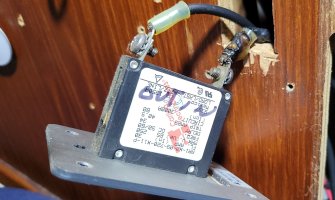
Do we trust the E38's 40yr old AC and DC breakers?

Vtonian

E38 - Vashon
Fate has caught up with me so I'm updating the E38's wiring now, but as always, on a tight budget. That said, I try not to be penny wise and dollar dumb, so looking for brighter insights here.

The first question is, can I trust the old breakers to do their job? I do have some melted bits on the AC panel main breaker that were there when I married her 2+ years ago, so I don't know the cause but have assumed it's related to having the old 12ga service entrance wire being asked to support a new 30A inverter/charger. That particular bit I can address with a new 10ga service wire and a double pole 30A AC breaker for under $100.

For more context, I'm also already doing the whole rewire for swing away access door mounting thing, along with replacing the 5 100Ah dead AGM house batteries (thanks, fate) with a single 300Ah LFP and associated charging magic, and updating to smaller, more efficient solar panels while also assassinating a bunch of the other old wiring miscreants in the process, so I'm already up to my elbows in wiring and wallet.

I'd had the initial idea, both for cheapness and the cool, steam punk aesthetics of the old panels, to just put new Blue Sea fuse blocks and circuit breakers behind them and only rely on them to function as switches. I can do that for around $400 (and a LOT of fabby fiddly farting around), because I have some of that lying around.

Alternatively, replacing them with new Blue Sea approximate equivalents would run around $900, entail a lot less of the more excruciating fab work, and probably make everyone else feel much safer (but is there any real value to that).

So aside from the 10,000 things I'm not thinking about (chime in, please), Ockham sez just dig out another buck and do the new stuff. In the grand scheme, it probably only adds 30% to the total project, even if it doubles the panel part 100% (don't fact check my math but it's in that marina).

But for me, the kicker is whether there is any justification (excuse) for relying on anything about the old panels, or if it's just stoopit to put an old breaker behind another breaker or fuse. AI says it's not recommended but not banned, unlike plugging a surge suppressor into a surge suppressor, which literally causes fires all the time and is verboten.

I'd appreciate any input, advice, knowledge or opinion. I can get lost in my own head on these projects and any outside perspective can often open a door.

Fateful footnote:
The instigator of all this was the drain for the vent above the quarter berth. While ignoring the boat for the first rainy month of the season to make a winter cover, I neglected to look under the nav seat, where the PO had 'installed' a loose battery switch for the inverter/charger, and which had wiggled its way to the bottom of that undrained compartment. Apparently, when I moved from the free swinging buoy to a slip at the club and so hung a new 17in round ball fender for better protection in the fleet, I inadvertently hung it directly against the vent drain thru hull (didn't even know it was there), and I guess the old plastic thru hull's outer flange must have failed in a rollicking blow, being beaten by the ball fending against the finger pier, leaving the vent drain hanging hose loose inside to fill the nav seat compartment with enough rain water seeping in through the leaking vent cover plate to steep the battery switch in water for a nice long time. By the time I caught it, 5 of the six AGM batteries had been murdered, with the last one left with about half its original 800CCA capacity. Not crying about it, going LFP was on my list, but I am irritated I'm missing out on a lot of great winter sailing. The weather has been phenomenal this year, if you don't mind the planet frying...
 

bsangs

E35-3 - New Jersey
The weather has been phenomenal this year, if you don't mind the planet frying...
Please send some of your frying planet mojo to the East Coast, where we are in our coldest winter since the freaking 60's! :(

I trust the 40-year-old AC/DC breakers on our 35-3. They've given me no reason not to do so, anyway. But I also don't have an inverter, I use standard lead acid batteries, and the electrical system isn't exactly overloaded with a lot of heavy draw items, outside of the fridge and the windlass, and for a few days every season, a portable air conditioner when tied up at the dock. However, if I was concerned about them, and with doing all that other work and having everything taken apart anyway, I'd likely replace them. Would be incredibly frustrating doing such a detailed project and then having to redo it if they proved to be a weak link. Good luck.
 

peaman

Contributing Partner
Alternatively, replacing them with new Blue Sea approximate equivalents would run around $900, entail a lot less of the more excruciating fab work, and probably make everyone else feel much safer (but is there any real value to that).
I replaced all of my breakers last year based on reading that they lose reliability after many years. The article did not go into specifics, but they are, after all, miniature electro-mechanical devices so should be subject to the same corrosion and wear issues other devices exhibit. An unreliable circuit breaker sounds to me like an unnecessary danger.
 

Nick J

Contributing Partner
Moderator
Blogs Author
I've replace everything form the shore power connector to the outlets (https://ericsonyachts.org/ie/threads/ac-outlet-wire-termination.20887/) and I found many areas of concern.

First and foremost, change the shore power receptacle to a Smart Plug. There isn't anything else on the market that comes close to what they've done and everything else is prone to failure. Rod Collins has an excellent article on this on his Marine How To page (https://marinehowto.com/shore-power-cords-smartplug-vs-1938/. My shore power outlet looked to be in like-new condition during our initial survey. One year later, it had scorch marks and the hole in the fiberglass was discoloration from heat.

The second most important issue I found was the wire terminals. They are not heat shrink style and the wire is plain copper which resulted in some pretty brittle and corroded connections at the receptacles and panel. Unfortunately for me, as I cut the wire back, the corrosion was far enough that I couldn't obtain enough slack to splice on new terminals, so I had to replace all the wiring. It wasn't easy, but I was happy to do it. I'm not sure why, but it seemed like the insulation was breaking down and leaching some kind of substance that made the cable sticky. You said you're already rewiring, so sounds like you're on the right track.

Wall outlets were also corroded and loosing their ability to hold plugs, so I replaced those while I was at it. As I was removing the outlets, most of the boxes they were housed in crumbled, so those were replaced too.

If I remember correctly, the panel in our old 25+ used A series breakers like the ones Blue Sea uses in their traditional panels. If that's the case on your panel, your plan to replace the individual breakers should work well. If you're short on space, you could replace the main double throw breaker with 2 distribution breakers and add a main breaker closer to the shore power plug.

I know this isn't the answer most folks want to hear, but out of all the work I've done on my boat, replacing the AC electrical system turned up the most potential issues that could very easily have resulted in loosing the boat. The problem becomes more critical as we add loads to our boats like charging phones laptops and all the other new items as well as simply keeping a heater on board over the winter. This one's easy to ignore, but it's going to catch up with owners eventually.
 
Last edited:

Kenneth K

1985 32-3, Puget Sound
Blogs Author
to just put new Blue Sea fuse blocks and circuit breakers behind them and only rely on them to function as switches. .....and a LOT of fabby fiddly farting around
Not sure I understand the concept of coupling new, Blue Sea components with the old beaker/switches.

I don't imagine you can disable the over-load protection on the old breaker/switch, so I'm guessing you would just wire a new fuse or breaker in series with the original. Thus, even if the original fails to trip, the new breaker would trip before the old unit could get too hot.

Would you be doing this with fuses, breakers, or a combination? How much additional fabbing is required beyond the behind-the-panel mounting and wiring?

On the aesthetic tradeoffs, I'm stumped. I do see some value in keeping the looks of the original panel, but then again I'm always impressed when I see a shiny, new, quality electric panel on someone's boat, provided there's quality workmanship behind the panel of course.

P.S.: I didn't know it was wrong to plug a surge protector into a surge protector. But then again, I've never been tempted to do so. Maybe people do it just to get a longer extension on the cord.
 
Last edited:

Vtonian

E38 - Vashon
Thank you, folks. Much appreciated.

@ bsangs, 'incredibly frustrating' is exactly what I don't want in a sailboat, and this perspective on the likelihood of near future failures is probably going to tip the scales to all new panels. Sorry, I wish I could do something about the weather, but Mark Twain was right.

@ peaman, 'unnecessary danger'... I'm sensing a trend here.

@ Nick J, I do already have a Smart Plug, ironically wired up to the old12ga wire for that 30A service, which is on the list. And yes, all new tinned wire and tinned heat shrink connectors where added or needed. I really hope I don't find the level of corrosion you did inside the wiring but hope is cheap. I'll check the boxes, hadn't thought of that. I really hadn't thought about looking for replacement breakers that would fit in the panel, that could be a real winner, saving a lot of time and money and the original look as well. And you're right, 90% of the time I don't need or use most of the electrical stuff on there but if I'm able to get both my daughters to go out again on a 2 week journey this summer, it'll be worth every muscle cramp and all the pennies.

@ Christian W, I saw your old post about updating your DC wiring but missed whether you'd done more. You're my favorite boat work hack: just do what CW did (where possible).

@ Kenneth K, yes, that was my idea, the new ones would catch any issues and the old ones would just be switches. Fabbing is mostly behind the panel but also considering installing the new on/off switch in place of the old 1-2-both switch. I'd lose the cool knob but avoid having to blast another hole somewhere else for the switch. On surge suppressors, I found people with under wired houses would just keep adding them as plugs, not thinking about the loads at all. A fire inspector told me that years ago. Not good.

Thanks, folks. I'm going to give my kludge concept one last look this afternoon and give it a hard rethink. A thing I may not have given enough thought is the depth of the actual space behind the panels may not be enough for any breaker blocks, regardless how much it might $ave. Also will spend some time looking to see what toggles might be a good direct-ish fit replacement. That seems like the greatest overall savings of time, effort and money. If all that mucking about doesn't produce anything more, clearly replacing the panels would be the right thing to do.
 

Nick J

Contributing Partner
Moderator
Blogs Author
Wow, good thing you're finding the stuff now.

I misstated the standard breakers in my previous response and said they were C series (edited to correct), They are actually A series unless they are high power breakers. A series breakers are fairly affordable. Double pole breakers typically used for mains are $44 on Amazon and the single throw breakers used in distribution circuits are $22. The panel we have is somewhat affordable at $263 at defender (https://defender.com/en_us/blue-sea...88c5536581917c410e7&utm_term=4580153138713961). A new pannel will come with bus bars to tie the breakers together, modern LED indication and label lights, and labels if you go with a new panel. If you have a similar number of breakers on the Ericson panel you'd be replacing, a new panel is only $130 more.
 

Loren Beach

O34 - Portland, OR
Senior Moderator
Blogs Author
Back in 1984, I wonder which type of breaker EY was using in their panels? If they had started sourcing bespoke panels from NewMar, you might contact that company about replacing them. If you have the earlier toggle-handle type, perhaps others here can provide replacement info.
 

Christian Williams

E381 - Los Angeles
Senior Moderator
Blogs Author
I wonder which type of breaker EY was using in their panels

The metal-toggle breakers were originally manufactured by AMC/Wood. I don't know if this source still works:


ConchyDug

Member III
Dang yeah, focus on the AC side of the boat first as several people pointed out. I went with new panels with toggle breakers just makes a cleaner install. Also don't assume a crimped connector is good on these boats pull on them, not crazy hard but enough to test the crimp. I definitely had second thoughts about buying an Ericson after seeing the wiring.... but I think a lot of that is induced by it being a 45yr old boat that's had several poorly executed electrical revamps by previous owners.
 

Prairie Schooner

Jeff & Donna, E35-3 purchased 7/21
Is anyone here familiar with the electric systems of similar premium boats of the era? Were those wired significantly better than ours?

C&C, Saber, Tartan, ?
 

Drewm3i

Marine Surveyor
Is anyone here familiar with the electric systems of similar premium boats of the era? Were those wired significantly better than ours?

C&C, Saber, Tartan, ?
I can't speak on those but from my preliminary diggings on my 1992 Hunter 37.5, the electrical system is substantially better designed and executed than my 1986 E-38-200 was. Of note, the AC and DC sides are functionally on separate panels and there is a dedicated 30-amp inlet for air conditioning/heat. The boat also came with a substantial manual with drawings of the original electrical system--both DC and AC sides.

I will do more digging to confirm but I believe they did not use solid copper wire and that all or nearly all of the cabin outlets are GFCI. To my surprise, there is also a "lightning grounding system" that ties the rigging/chainplates and mast together at the forward keel bolt. The batteries are also located in an aft locker with the AC-inlet panel and main breaker, so they are not directly in accommodation areas.

I have also owned a couple of 90s power boats with AC systems that were better/safer than the 80s Ericsons. I really just think it comes down to age and what was considered "safe" and normal at the time for electrical systems, particularly AC. The standards have evolved greatly since Ericson's last yacht rolled off the production line, great as they were/are.
 

Drewm3i

Marine Surveyor
I can't speak on those but from my preliminary diggings on my 1992 Hunter 37.5, the electrical system is substantially better designed and executed than my 1986 E-38-200 was. Of note, the AC and DC sides are functionally on separate panels and there is a dedicated 30-amp inlet for air conditioning/heat. The boat also came with a substantial manual with drawings of the original electrical system--both DC and AC sides.

I will do more digging to confirm but I believe they did not use solid copper wire and that all or nearly all of the cabin outlets are GFCI. To my surprise, there is also a "lightning grounding system" that ties the rigging/chainplates and mast together at the forward keel bolt. The batteries are also located in an aft locker with the AC-inlet panel and main breaker, so they are not directly in accommodation areas.

I have also owned a couple of 90s power boats with AC systems that were better/safer than the 80s Ericsons. I really just think it comes down to age and what was considered "safe" and normal at the time for electrical systems, particularly AC. The standards have evolved greatly since Ericson's last yacht rolled off the production line, great as they were/are.
Just confirmed: all AC cable is proper insulated and flexible, tinned-copper "boat cable" consistent with ABYC recommendations. The main wire to the panel is 3 AWG, the rest looks to be 10. It seems every other outlet is GFCI with integral breakers so I am guess they are wired in pairs.
 

bsangs

E35-3 - New Jersey
FYI, if anyone isn't looking to do a complete overhaul of the non-GFCI outlets - I still have three that are standard outlets - these work very well: Single Outlet GFCI Adapter. True, you do lose one receptacle wherever it's used, but that hasn't been an issue for us. I do eventually plan to convert those outlets.
 

Loren Beach

O34 - Portland, OR
Senior Moderator
Blogs Author
non-GFCI outlets
This description and sentence puzzles me. Our '88 boat has a couple of factory GFCI outlets, and like the ones in our home protect the several others "downstream" from each one. I have had to replace one outlet in the main cabin that failed due to age. The other one in the head seems OK.
For convenience I have also added some extra 12 volt outlets and some USB outlets as well.
 
Last edited:

bsangs

E35-3 - New Jersey
This description and sentence puzzles me. Our '88 boat has a couple of factory GFCI outlets, and like the ones in our home protect the several others "downstream" from each one. I have had to replace one outlet in the main cabin that failed due to age. The other one in the head seems OK.
For convenience I have also added some extra 12 volt outlets and some USB outlets as well.
I'm not gonna pretend I know how that works, Loren. :D Ours has visible GFCI outlets in three areas - one on the floor beneath the removable Q berth seat, one in the galley, and one in the head. The other three outlets look like normal non-GFCI outlets. If they're protected "downstream" from the others, that's (good) news to me.
 
Top