
Kind of summarizes most of youtube, doesn't it?That guy in that video gets and E for effort & enthusiasm, but flunks in understanding (at least on camera) what is really needed to address the root cause of his problem.

Kind of summarizes most of youtube, doesn't it?That guy in that video gets and E for effort & enthusiasm, but flunks in understanding (at least on camera) what is really needed to address the root cause of his problem.


Yes, there was significant deck camber. I preserved the center line of fiberglass between the non-skid areas along the entire length of the deck to maintain a reference point.When you do an area that size do you have to worry about losing camber across the deck?
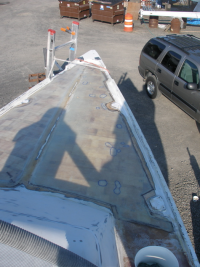

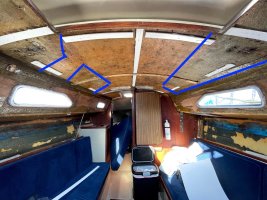
You may find that some of the fiberglass won't come off cleanly. Or if it does it means you haven't removed enough area to get back to solid core. I did a similar job from underneath on the side decks but used 1/2 inch balsa core material from Jamestown Distributors along with 1/2 G10 plates under deck fittings. As boat projects go it was technically easy, but quite messy. Line everything with plastic.glue the fiberglass layer again,

Yes, PPE and protecting the interior are very important. Having done this I don't envy you one bit.
I also used balsa since it seemed to have held up for at least 40 years. Mapping out each area with a 1/8" drill bit and a Sharpie. As mentioned above, it's doable but messy. I wouldn't get too hung up on saving the old skin, this could be a great time to learn about vacuum bagging. If you can do it upside down, you can do it anywhere!
I have no experience with injectadeck other than videos lamenting its use when it comes time to do the job over with a solid core. As far as expanding foam goes, again no experience but it seems to me that one could end up with a bigger project than what they started with if they weren't careful. If I had to do it again I'd use balsa, (there's a chance the right person could talk me into foam), and perhaps plywood or G10 in a few strategic places.
Mind you these are just opinions, I'm sure there's any number of cases where the alternatives have worked out just fine. Good luck!

yo convinced me to go with the proper repair.I used vacuum bagging on my port side repair, but decided not to use it on the starboard side. Vacuum bagging requires a perfect seal for it to work and you can only achieve that by sealing against the top skin (assuming you are going from below). If you try to seal against the bottom skin, the air will travel through the good core and escape through the staple holes. On the port side, I installed the bulk of the new core with vacuum, then filled in the space between the new core and old core using extendable drywall sanding poles to push up. At the end of the day, our boats aren't super light racers, so a little extra resin between the outer skin and new core isn't going to hurt anything. Here's a some more detail on my experience:
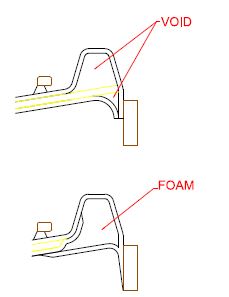
E25+ - New Core...the wrong way I'm told
The first step with replacing the core was identifying justhow much core was rotten. As you canexpect, the affected area was greater than I initially expected. The void along the edge and between the topskin and balsa created by not spreading...ericsonyachts.org
Yes, I cut into the laminate while it was on the hard, but the rest of the job was in the water. The Mast was up the whole time.yo convinced me to go with the proper repair.
I think. I'll plan for the end of the season, @trickdhat did you do this repair with the boat on the water and the mast stepped?
 fiberglasssupply.com

 goodoldboat.com


I have seen this done several times from the DIY world with varying success. Watching him spray the water onto the part prior to glueing made me scream inside. Yes it's catalyzed by water, but there would be plenty trapped in the part for that purpose. I highly doubt the glue consumes all the water in the curing process and any that's trapped will cause the problem to reoccur.
No boatbuilder I have ever met would call this acceptable. Lots of data has been collected about epoxy resins and their fatigue cycling (west system). No data that I am aware of exists about fatigue cycling this method (secondary bonding via gorilla glue). No other core material can handle fatigue cycles like wood when kept dry, even the fancy foams, they just don't rot so they can last longer without maintenance.
For a hatch cover or non loaded part like this video shows, it will probably last a lifetime assuming no more water gets in. (You would still want a coat of epoxy to prevent future water intrusion) For a deck or other structural component I wouldn't trust it.
Id love to see some data on it though, happy to be proven wrong.
I have fixed a few soft deck patches on Cinderella, its very easy to do properly with a multitool, fiberglass and epoxy. Cut out rot, template new core, add thickened epoxy, set in place with gravity clamp. Have a few beers until the glue kicks, then sand and glass over the top with peelply. You have to paint it regardless of the procedure. It can even be done all in one go once you get the hang of epoxy
It doesn't take more than a couple days to cut glue and coat, unless you are looking for a mirror finish.
-p
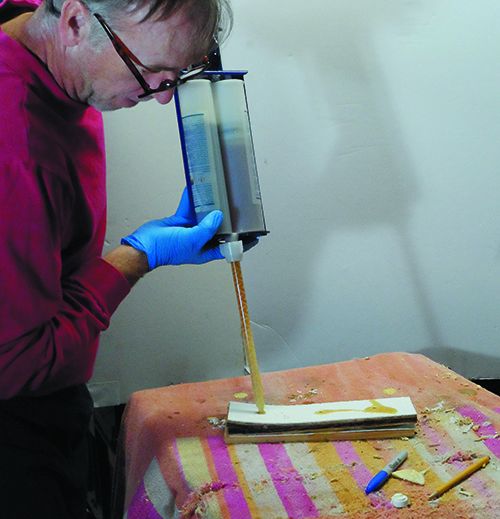
 www.practical-sailor.com

